TEAM AFRICA TURKEY
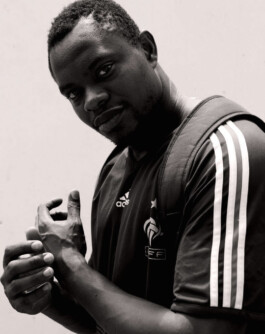
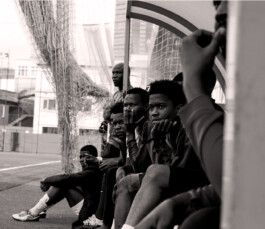
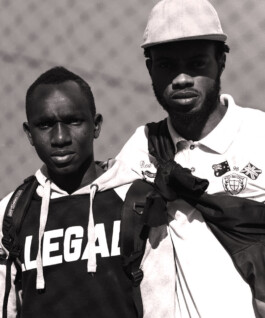
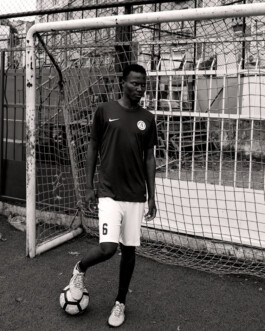
THE IDEA FOR THIS EXHIBITION evolved over the course of nine months. It was inspired by curiosity. We’d seen these players train regularly on Feriköy training pitch and wanted to know more about them. They were excellent footballers and athletes, focused, committed. We started talking to them, hearing their stories, about their lives in Istanbul, their journeys here.
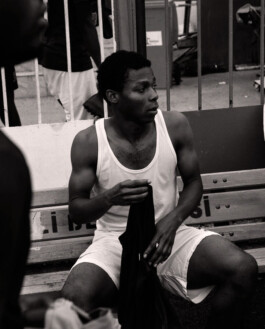
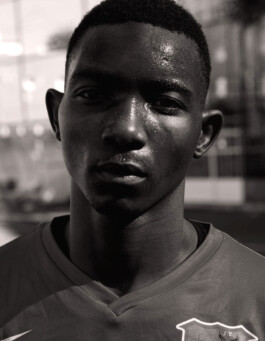
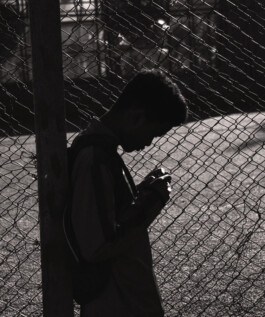
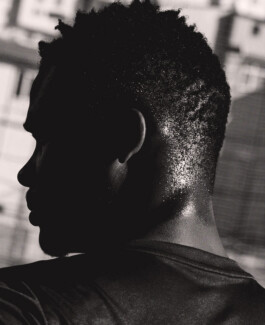
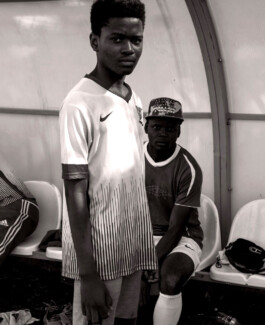
Many news stories have been written about their collective situation in Turkey. We wanted to find a different space, a way to put the players faces before the systemic violence they’re trapped in. A space neither of victimisation nor naïve celebration but of more honest portraits of a group of young men living in Istanbul.
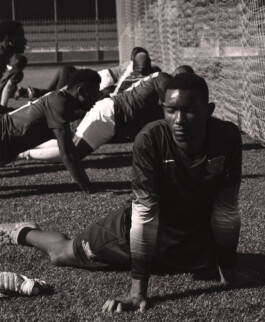
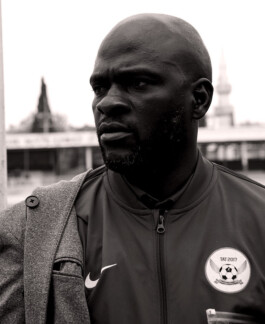
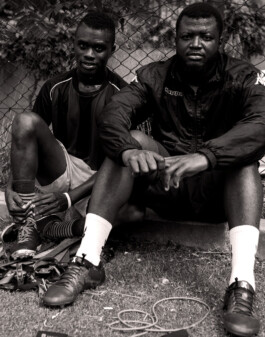
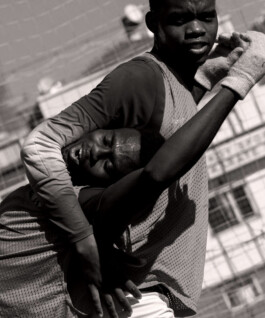
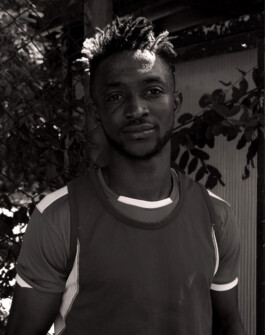
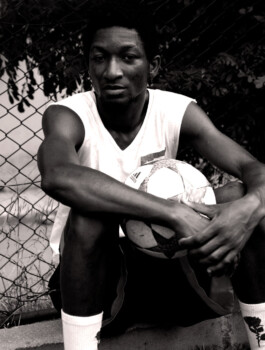
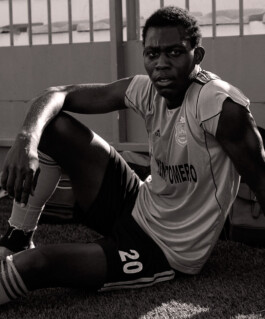
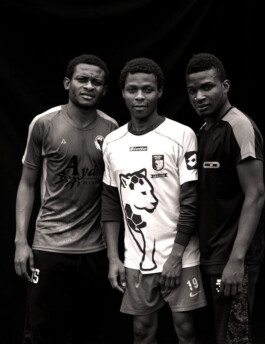
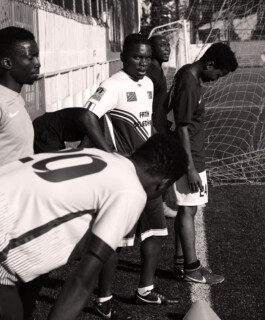
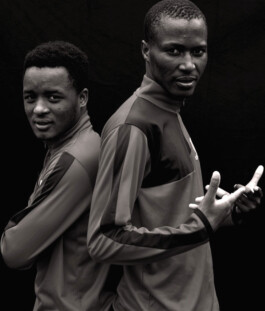
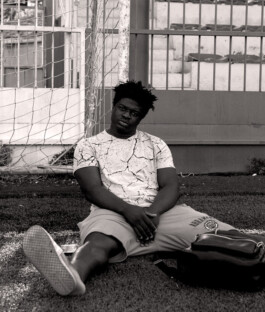
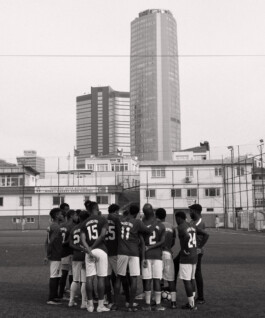
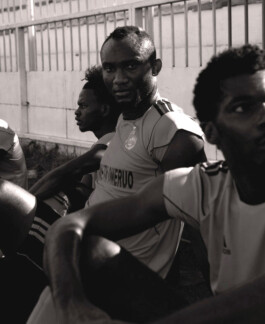
It wasn’t obvious how we should transmit this information. We chose a photography exhibition. Photographs are very powerful, sometimes dangerous, tools. They allow for objectification, or misinterpretation. But they also allow the possibility of a more intimate relationship with the players to be developed. This is one aim of the exhibition. They’re photographed on the field of play, in their identity as footballers, both their reasons for being here and the drive around which they’re building their lives.

Exhibition at REM Artspace Istanbul; Photography Stella Schwendner ; Text Helen Mackreath
They were professional footballers in their home countries. They came to Turkey on false promises of progress. Their path is guided by the fickle market of football glory, growing fat off the dreams of men.
A bird’s arc moves from the point of departure between land and sky, to an apex of infinite height and duration. The sky is full of traces and invisible circles marking their flight. Footballers mark their circles on pitches between lands, economies, language. Their experiences are historical reflections of obsessive consumptions, systems of exploitation, neo-colonial games, the dull weight of marketised aspiration, the self-respect of man.
In this state of liminality, residues of one objective understanding blend with dreams of another. In this state, dreams are given heightened powers. In Ferikoy, in Gayrettepe, in Çapa. They play in the mornings, evenings, nights. They play holy matches, church to church, country to country, club to club. This is the gap between their reality and dream, the space between a question and an answer.
“He is setting out single-handed to complete a historic transformation which has been stopped short” (John Berger, The Seventh Man).
These photographs document a group of young professional footballers who travelled to Turkey from various African countries, many on scams. They are continuing their playing careers in revolving non-professional clubs in Istanbul with the ambition of being scouted to continue their professional careers.

“Turkey is not a good place for young players. Going back home is not an option, because the parents are expecting something in return for their investment. That’s why some of these boys find their way onto the boats to Greece. In the last two weeks, one of the Congolese guys called me. He found his way to France. I didn’t know anything, he didn’t tell me before he left.” (Mr Timothy, Manager).
z
z

The business of football is global. The forces that brought these men here are global forces. Not of supply and demand but dreamers and exploiters. There is supply but the demand is ambiguous. How can you measure the worth of a fighter? As demand lowers, the fighter must multiply their strength.
z
z

“I know how he thinks. Even with my eyes closed, I know if my striker is at my back. I know if he has a lot of speed, has enough speed. If I know he’s there, I can pass through, I know if he doesn’t have enough speed I can pass back. That’s what’s called understanding.”
“When you get to the team, it’s just like someone playing keyboard. I play my own style, you play your own style. But it depends on how you know to play together.”
When you train your body how to play, you’re honing your connections to other bodies. It’s a selfless endeavour. You are teaching yourself to become part of a wider organism. This is an act of creation.
z
z

“I know a few Nigerian players and Ghanaian’s who play in the premier league of their country. A few of them played in the Under-17 National Team for the World Cup. Like the Goalkeeper. There was another Ghanaian guy who played in the World Cup. One manager or another brought them to Turkey, promising them Fenerbahce, Galataseray, Beşiktaş. When they get here it’s a different ball game. They’re dumped on the street, they have to try to survive, eat, find accomodation.” (Mr Timothy, Manager of Team Africa Turkey)
z
z

“A lot of people are coming into football because of the money. They don’t care about the player. That’s exactly what happens here in Turkey. You can pick any player and take him to Bali, get the commission and off you go. That’s not a manager, that’s a money pusher. They’re profiteers…Leadership is not about establishing authority, but about making sure the right things are happening in your environment.”
z
z

“I’ve been training since I was a child. Street football. As a child, that’s where you start. Streets to streets, cities to cities against each other. I grew up in Ibadan in South-West Nigeria. I was born and brought up there. When you’re a champion in your area you need to go outside, to know if you’re better than the rest. You have to move out. I couldn’t even recollect a time when I wasn’t kicking ball. Because football is inborn, it’s not something you start learning.” (Joshua, Winger).
z
z

“Football is not about nationality. He’s sitting now, I’m sitting now quietly. If you walk past here you cannot say if I’m from Nigeria or Congo, until I open my mouth. We are brothers.”
But hierarchies between nationalities still remain. The reason these men are in this situation is because of their place of birth.
z
z

“We’re on the same course, and that’s the most important thing. No matter what is going on, everything will be alright. No matter what is going on, people will encourage you.” (Joshua, Footballer)
z
z

The pitch is the only space where they’re free, and yet it contains the bounds of their prison. Their football identities are their boundless spaces to forget. But they are also the path of entrapments.
z
z

1,800 African footballers participated in African tournaments in Istanbul in the last five years. Probably over 2,000 African footballers are in Istanbul today, by some estimates. A fourth division player in a Turkish club earns an average of $8,400 a year, in comparison to a few hundred dollars in any African club. In Turkey in 2016/7 football revenue for the premier league was €734 million.
Most of these players are not with professional clubs, they are hawkers and workers. They work in packing industries, cosmetics, plastics, import-export industries between training and match times.
z
z
uuu

“In football you have to have a strong character. You have to be aware of any possible situation that may come. Some days you are there to learn, some days to do what you have learnt.”
z
z
uuu

Several decks of cards have already been played and won. From the street games of childhood, street to street, cities to cities. They were professional footballers in their home countries, they gambled on Turkey as a place to continue their careers. That gamble is ongoing. Chance comes and goes like lightening and thunder.
z
z
uuu

“My name is Henry. I’m from Nigeria. I’ve played at Ferikoy Spor for this season. Every season I go to another league, I don’t stay in one place. When this season finishes I will go to the Iraqi league. My first country was Belarus. After Belarus, India. After India, Indonesia. From Indonesia to Tunisia. I’m just moving around. My mother is a teacher, she’s teaching in primary school, she misses me so much. My father is a trader, buying and selling. He sells machine parts.”
“I used to play for Dynamite FC in Nigeria. I spent one week in Kenya and one month in Tanzania with youth clubs. But the contract wasn’t what they promised, so I left. I came to Antalya Spor with another player. We stayed for one month before we came to Istanbul.”
z
z
uuu

The economy of football is unequal. More people want to play football than football contracts exist. But the economy of dreaming is endless. Dreams cannot be dulled, they merely mutate along different tangents. The surface of the dream breaks at fragile points but its fruit is tough.
There is no finite dream value. Without shape, without size, without age, without transferable codified value. It can be squeezed into many different forms, or subverted. Men grow old with their dreams intact.
z
z
uuu

Liminality is the quality of ambiguity or disorientation that occurs in the middle stage of rituals, when participants no longer hold their pre-ritual status but have not yet begun the transition to the status they will hold when the ritual is complete. These men are stuck in ambiguity. Either the shape of the ritual will change, or they will. What happens in between is the space that makes up a life.
z
z
uuu

“I’m a goalkeeper. I love to protect. Being a goalkeeper is about protecting the goal line. The game depends on you. We have to have a good relationship with your back four, they have to respond to your call every time and you have to respond to their call.“ (Anneli, Goalkeeper)
z
z
uuu

They are footballers. They are Nigerians and South Africans, Cameroonians, Malians, Ghanans, Gambians. There are Zambians, Senegalese, Sierra Leonean, Congolese. They come from Cote D'ivoire, New Guinea, Burkina Faso, Liberia and Somalia. But they are footballers. It transcends border spaces. They scatter in the wind North, South, East, West. Maybe to Russia or Japan or Papa New Guinea. They were blown to Turkey.
The pitch is their common ground and they the green seeds to be planted after their flight.
z
z
uuu

“Most of their parents have to take a loan to pay for them to come. Sometimes it can be up to a million, one and a half million lira. That’s about $4-5000. In Nigerian currency that’s a whole lot of money. You can start up a life with it back home.”
A mother and father’s kindness and ferocity transports them. Their wings are too big to fit that embrace. Fierce belief brings its own heavy weights.
“Home is where you come back and receive happiness. Home is when you have people around you that love you. I can say that Istanbul is home, because I’m with people that make everything possible. There’s no happiness in this life without home.” (Joshua, Winger)
z
z
uuu

Their bodies are political sites of consumption. The flex of their muscles are exposed to the male and female eyes of the Şişli streets. They are marks of physical achievement trapped in systems of hierarchy. They are marks of stunted journeys. They are marks of pushing against a wall of violence. People stop to watch them play, mesmerised; others pass disinterested.
z
z
uuu

Every man must sell his best strengths to the market. For some football is a dream, for others a pragmatic reality. Football is their market ticket, but the market is a violent space of continuous exclusion.
“They don’t want the money, they want to play in the league.”
“Football is a job.”
At the same time, their own countries are losing their market value which they had begun to invest in, but failed to keep.
z
z
uuu

Hands raised to the sun as if in holy prayer or dance. We show ourselves to you in bold exclamation, receive us.
“For I lift up my hand to heaven, and say, I live for ever.” (Deuteronomy 32:40)
z
z
uuu